
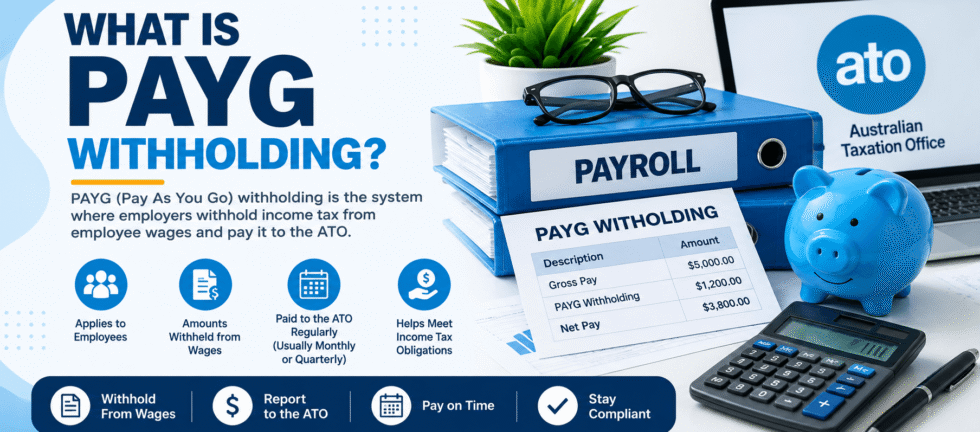
What Is PAYG Withholding?
If you employ staff in Australia, you’ve likely come across the term PAYG withholding. It’s an important part of the Australian tax system that helps employees pay their income tax throughout the year instead of receiving a large tax bill at the end of the financial year.
Understanding how PAYG withholding works can help your business stay compliant and avoid unnecessary penalties.
What Is PAYG Withholding?
PAYG withholding (Pay As You Go withholding) is a system where employers deduct tax from an employee’s wages or salary before paying them. The withheld amount is then sent to the Australian Taxation Office (ATO) on the employee’s behalf.
This means employees receive their pay after tax has been deducted, and the tax is credited towards their annual income tax when they lodge their tax return.
Who Needs to Register?
You generally need to register for PAYG withholding if your business:
- Pays salaries or wages to employees
- Pays directors or office holders
- Makes certain payments to contractors
- Makes payments where an ABN hasn’t been provided in applicable situations
If you’re hiring employees for the first time, it’s important to register before making your first payment.
How Does PAYG Withholding Work?
The process is straightforward:
- An employee provides their Tax File Number (TFN) declaration.
- You calculate the correct amount of tax to withhold based on ATO tax tables.
- You deduct the tax from the employee’s pay.
- You report and pay the withheld amount to the ATO by the required due date.
Many businesses use payroll software to automate these calculations and reduce the risk of errors.
What Payments Does It Apply To?
PAYG withholding commonly applies to:
- Salaries and wages
- Bonuses and commissions
- Director fees
- Allowances
- Some contractor payments
- Certain termination payments
The amount withheld depends on factors such as the employee’s earnings, tax-free threshold claim, and current ATO tax rates.
PAYG Withholding vs PAYG Instalments
Although the names are similar, they’re different systems.
PAYG withholding is tax that employers deduct from payments made to employees or certain workers.
PAYG instalments are advance tax payments made by individuals or businesses on their own income.
Understanding the difference helps ensure you’re meeting the correct tax obligations.
Employer Responsibilities
As an employer, you’re responsible for:
- Registering for PAYG withholding
- Withholding the correct amount of tax
- Reporting payroll information to the ATO
- Paying withheld amounts on time
- Keeping accurate payroll records
Meeting these responsibilities helps your business remain compliant and avoid penalties.
Final Thoughts
PAYG withholding is a key responsibility for Australian employers. By deducting the correct amount of tax from employee payments and remitting it to the ATO, you help employees manage their tax obligations while ensuring your business complies with Australian tax laws.
Using reliable payroll software and maintaining accurate records can make the PAYG withholding process much simpler, allowing you to focus on running and growing your business.