
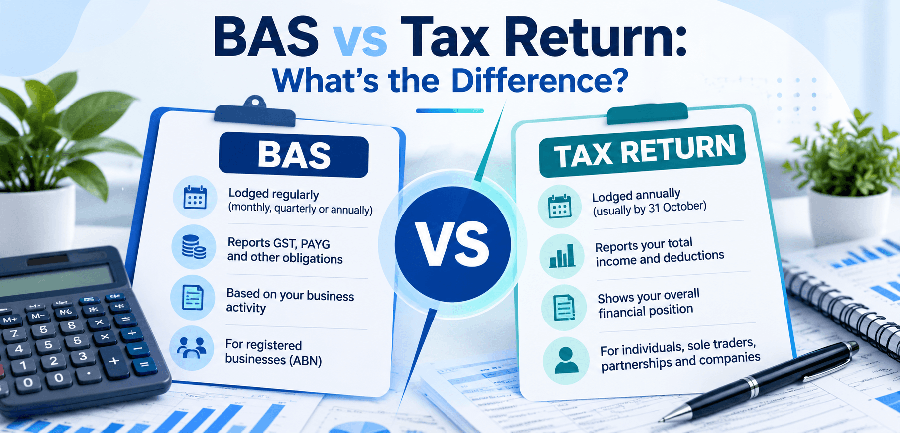
BAS vs Tax Return: What’s the Difference?
Many business owners assume that a Business Activity Statement (BAS) and a tax return are the same thing—but they serve different purposes. Understanding the difference can help you stay compliant and avoid unnecessary confusion.
What Is a BAS?
A Business Activity Statement (BAS) is used to report and pay business taxes such as Goods and Services Tax (GST), PAYG withholding, and other tax obligations. Depending on your business, you’ll usually lodge your BAS monthly or quarterly.
What Is a Tax Return?
A tax return is an annual report that outlines your business’s income, expenses, and overall profit or loss for the financial year. It’s used to calculate how much income tax your business owes or whether you’re entitled to a refund.
BAS vs Tax Return: Key Differences
BAS | Tax Return |
Lodged monthly or quarterly | Lodged once a year |
Reports GST and other business taxes | Reports annual income and expenses |
Helps meet ongoing tax obligations | Calculates annual income tax liability |
Required for GST-registered businesses | Required for most businesses each financial year |
Why Both Matter
Your BAS helps you stay up to date with your ongoing tax responsibilities throughout the year, while your tax return provides a complete picture of your business’s financial performance. Both are essential for meeting your tax obligations and keeping your business compliant.
Final Thoughts
Although BAS and a tax return are closely related, they have different purposes and reporting schedules. Understanding when each is required can make managing your business finances much easier and help you avoid costly mistakes.