
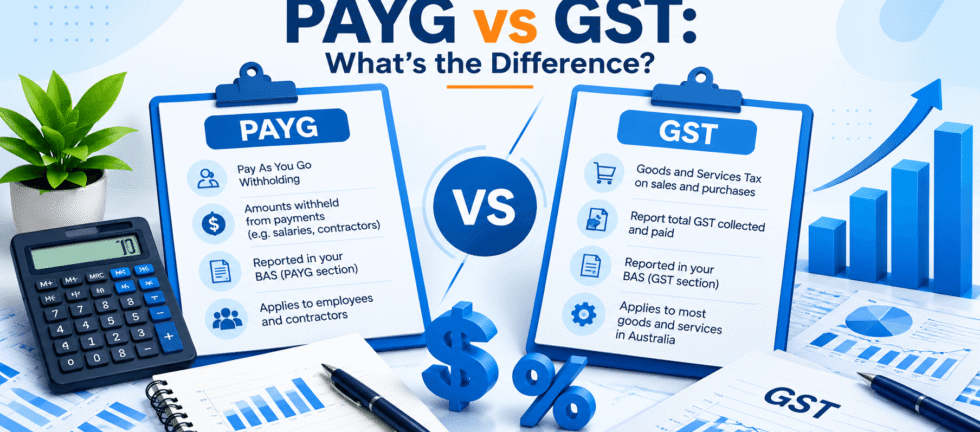
PAYG vs GST: Understanding the Difference
If you’re running a business in Australia, you’ve likely come across the terms PAYG and GST. While both are important tax obligations, they serve different purposes. Understanding the difference can help you manage your finances and stay compliant with the Australian Taxation Office (ATO).
What Is PAYG?
PAYG (Pay As You Go) is a system that helps businesses meet their income tax obligations throughout the year. If you have employees, you’ll withhold tax from their wages and report it through your BAS. Some businesses may also pay PAYG instalments towards their expected income tax.
What Is GST?
GST (Goods and Services Tax) is a 10% tax added to most goods and services sold in Australia. If your business is registered for GST, you’ll collect GST from customers and claim GST credits on eligible business purchases. The difference is reported in your BAS.
PAYG vs GST: Key Differences
PAYG | GST |
Relates to income tax | Relates to goods and services tax |
Includes tax withheld from employee wages and PAYG instalments | Collected on taxable sales and claimed on eligible business purchases |
Helps meet income tax obligations | Helps report and pay GST obligations |
Reported through BAS (where applicable) | Reported through BAS |
Why It Matters
Although PAYG and GST are reported through the same Business Activity Statement, they are separate tax obligations. Keeping accurate payroll and financial records makes it easier to report both correctly and avoid costly errors.
Final Thoughts
Understanding the difference between PAYG and GST is an important part of managing your business finances. By keeping accurate records and lodging your BAS on time, you can stay compliant and focus on growing your business with confidence.